Crane Scale Explained: A UK Buyer's Guide
Crane Scale vs Pallet Truck Scale for Warehouse Work
Compare warehouse crane and pallet truck scales by load type, travel path, headroom, lift points, records, data and UK legal-for-trade requirements.
For most warehouses, a pallet truck scale is the better choice for repeatable palletised loads moving at floor level, while a crane scale suits awkward, long or irregular loads that have rated lift points and already follow a planned overhead route. When deciding between a warehouse crane scale vs pallet truck scale, start with the load and movement path, then assess headroom, lifting arrangements, records and trade approval rather than comparing capacity alone.
Let the load form make the first cut
A pallet truck scale combines transport and weighing for goods already presented on compatible pallets. It can fit naturally at goods-in, stock transfer or despatch because the operator inserts the forks, raises the pallet just clear and takes a reading during the floor-level journey. Confirm pallet entry, load distribution, aisle width, turning room and floor condition before buying.
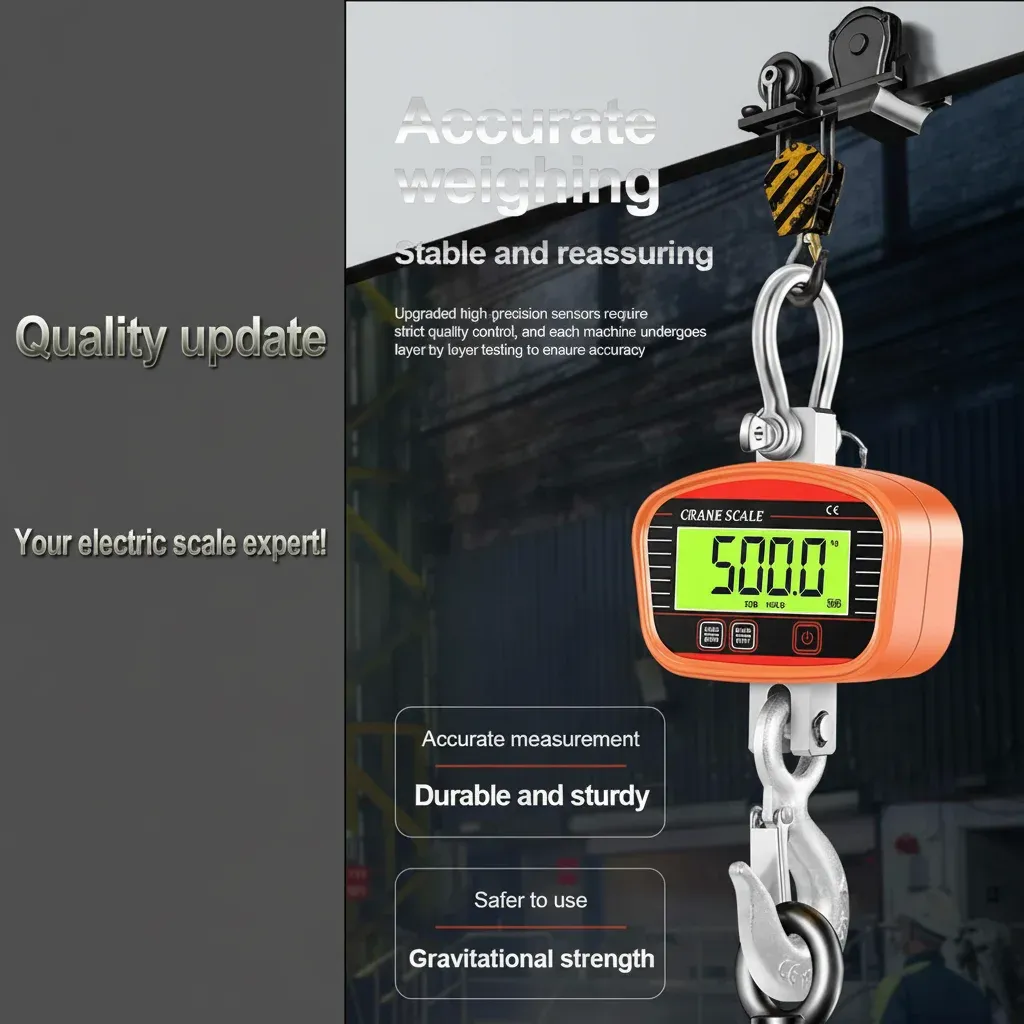
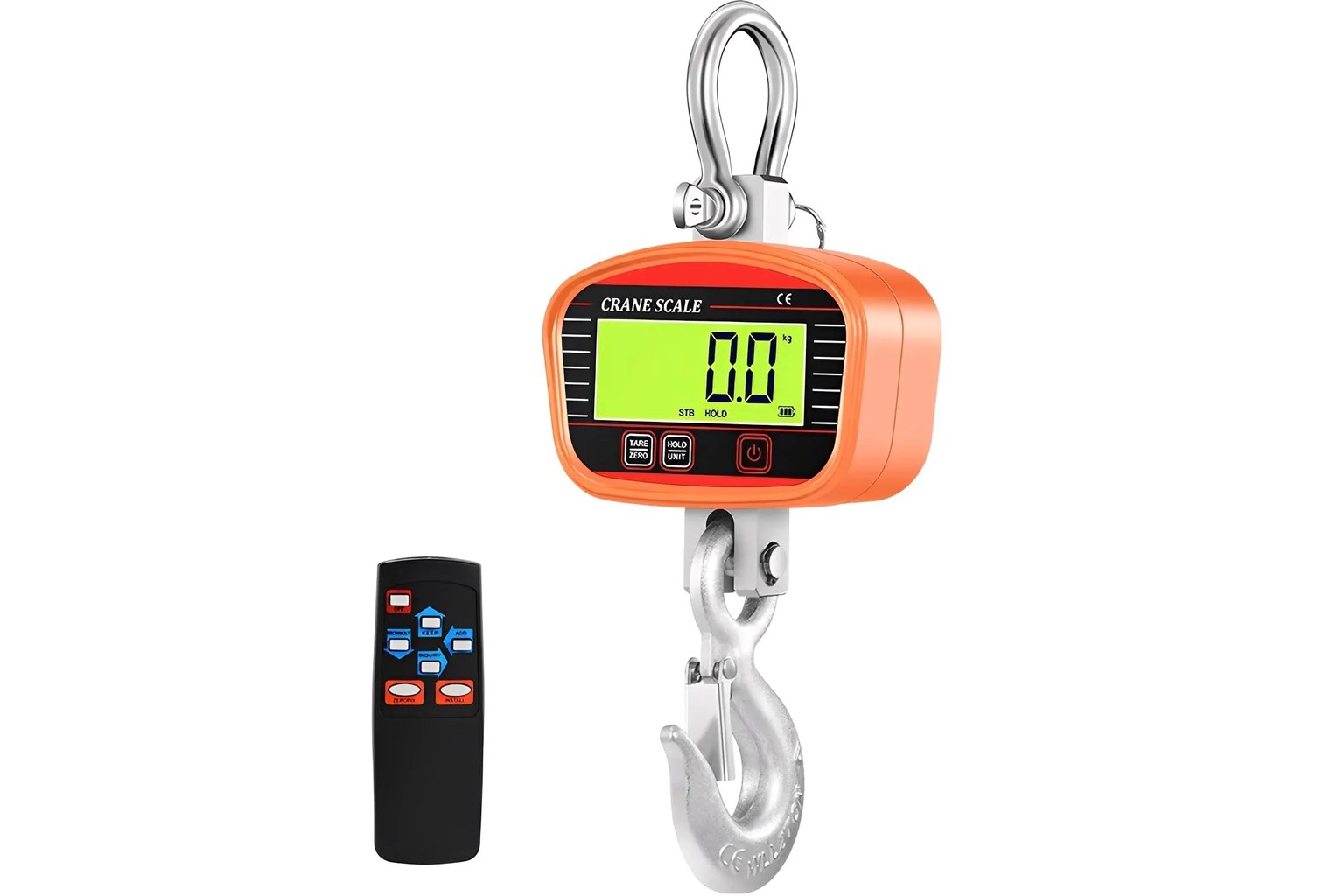
A crane scale belongs in a different workflow. It is useful when a fabrication, machine, stillage, bag or other awkward item cannot sit properly on a pallet but can be suspended from designed, rated lift points with suitable accessories. The P6 crane scale product page describes a hanging instrument for internal load checks. The load still needs a suitable crane or hoist; the scale does not make an unsuitable item safe to suspend.
Use this practical split:
- Choose a pallet truck scale when most loads are stable, palletised and moved along clear floor routes.
- Choose a crane scale when loads are genuinely suspendable and weighing can form part of an existing planned lift.
- If both load types are routine, two purpose-matched instruments may be safer and faster than forcing one method to cover everything.
Follow the real movement path
Map the complete journey from collection point to set-down point. A pallet truck needs fork access, a reasonably level weighing position and enough clearance to turn without striking racking, doors or people. Check that the chosen truck works with every pallet type in the process, not merely a standard sample.
An overhead route introduces different constraints. Add the scale body, connectors, slings and any spreader beam to the hook-to-load stack, then compare that total with the available lift height. Reduced headroom can prevent a clean lift or create conflicts at doorways, beams and racking. The crane scale and gantry headroom guide explains what to measure before purchase.
Suspended weighing also creates a hazard zone. The HSE safe-lifting guidance says to establish weight, centre of gravity, attachment method and equipment limits, and never lift when weight or equipment adequacy is in doubt. Do not stand below a suspended load, improvise suspension points or exceed the lowest-rated crane, scale, connector, sling or lift point. A crane scale supplements the lift plan; it never replaces one. Use the site’s crane-scale safe-use procedure when designing the task.
Compare the usable weighing system
Capacity on a product page is not enough. For suspended work, include the load, attached container and lifting accessories where applicable, then check every component’s marked safe working load and configuration. Also consider how readily the operator can obtain a stable reading without swinging, rotation or contact with nearby structures.
The P6 is stated to cover 0.5–3,000 kg and has a 500 g display division. That division is the smallest displayed step, not the same as verified accuracy. It does not prove indication error, repeatability or suitability for your process tolerance.
The comparison above uses manufacturer-stated figures throughout. On whichever unit you buy, a calibrated multi-point acceptance test at your process loads — recorded before first use — is what converts a specification into a working tolerance.
For either scale type, define an acceptable process tolerance, commissioning check and ongoing calibration plan. The right instrument must produce useful evidence at the loads you actually handle, not simply show a plausible number.
Decide what records and data must exist
Write down the required output before requesting quotes. Is a visual reading enough, or must the warehouse capture gross, tare and net weight, operator, item ID, date, time and job number? Some pallet truck scale configurations offer printers or connections to warehouse systems, but these are model-dependent options, not standard features of every truck.
The P6 has no printer or data output: no claimed API, RS232, Bluetooth, Wi-Fi or remote display. Its remote control operates functions; it is not a data terminal. A warehouse can transcribe a check weight into a controlled form, but manual entry adds identification and transcription risks. If automatic records, labels or audit-ready tickets are mandatory, choose equipment and software designed for that workflow.
Separate check weighing from trade weighing
The P6 is for check weighing, not weight-based trade transactions. A handwritten or electronic record of its reading remains an internal check; it does not turn the instrument into a legal-for-trade scale.
GOV.UK’s weights and measures business guidance says equipment used for business weighing must be passed as fit for trade by an inspector or approved verifier. Where price, payment or another regulated transaction is determined by mass, specify the correct legal-for-trade application at enquiry. Approved pallet truck scale variants exist, but approval is configuration-specific: verify the exact model, markings, installation and intended use with the supplier or local Trading Standards. Do not infer trade approval from an ordinary conformity mark.
Final selection questions
Before ordering, ask:
- Are almost all loads palletised, or are awkward suspendable items common?
- Does the normal route run on the floor or under an existing crane?
- Does every suspended load have suitable rated lift points and accessories?
- Is there enough headroom for the complete rigging stack?
- Are manual check records acceptable, or are printing and system integration required?
- Will any result determine price by weight?
Choose the method that changes normal handling least while meeting those answers. That usually means a pallet truck scale for pallet throughput and a crane scale for properly planned weighing of awkward loads.
Frequently asked questions
Can a crane scale weigh a pallet?
Only if a competent plan provides a suitable rated lifting arrangement for the pallet and contents. Ordinary pallet construction or strapping should not be treated as a lifting point. If the load can remain on its pallet and travel at floor level, a pallet truck scale is normally the simpler choice.
Is a pallet truck scale automatically legal for trade?
No. Internal-use and approved versions may look similar. Specify the transaction, country of use and required records, then obtain documentary confirmation that the exact supplied configuration is approved for that purpose.
Ready to try CraneScale?
Shop Now â £274.48