Crane Scale Explained: A UK Buyer's Guide
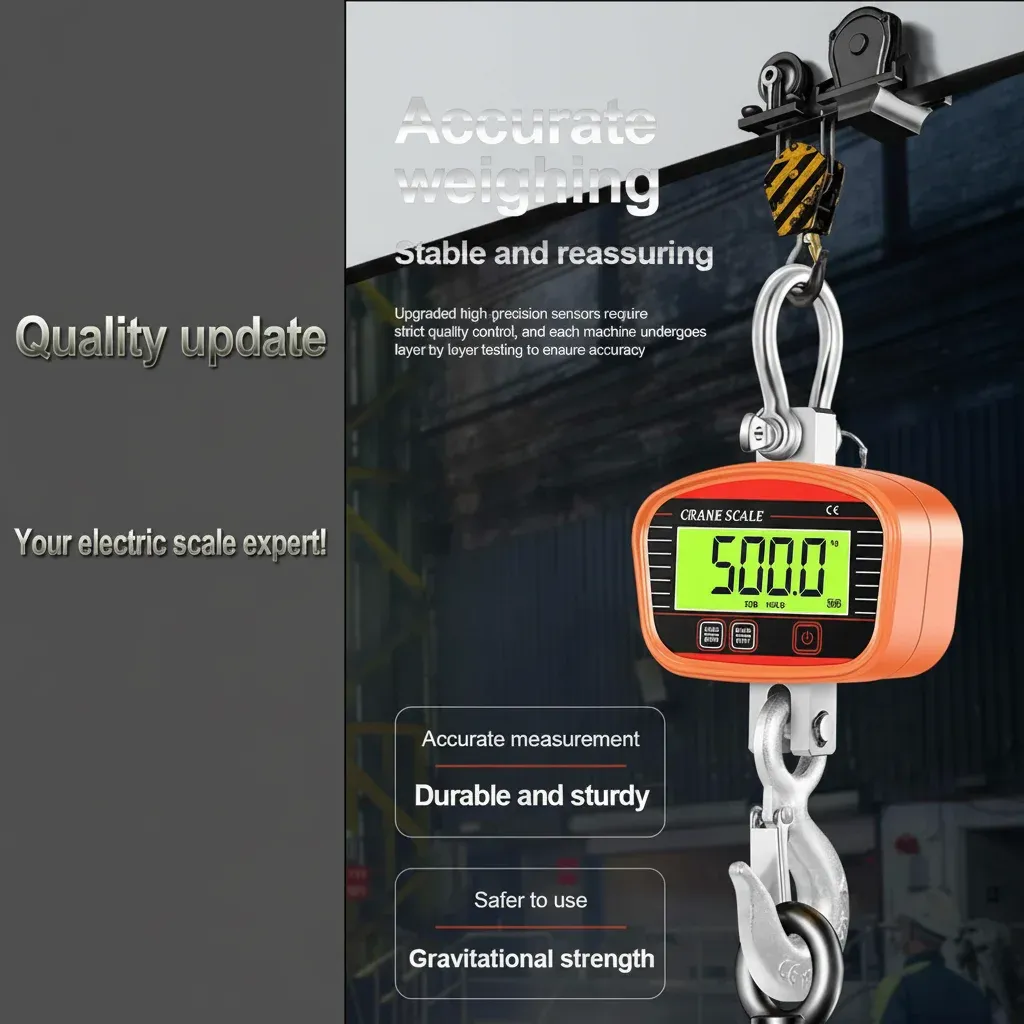
Crane Scale Hook Opening Size and Rigging Compatibility
Learn how usable hook throat, latch clearance, connector seating, articulation and headroom determine whether a crane scale fits rigging safely.
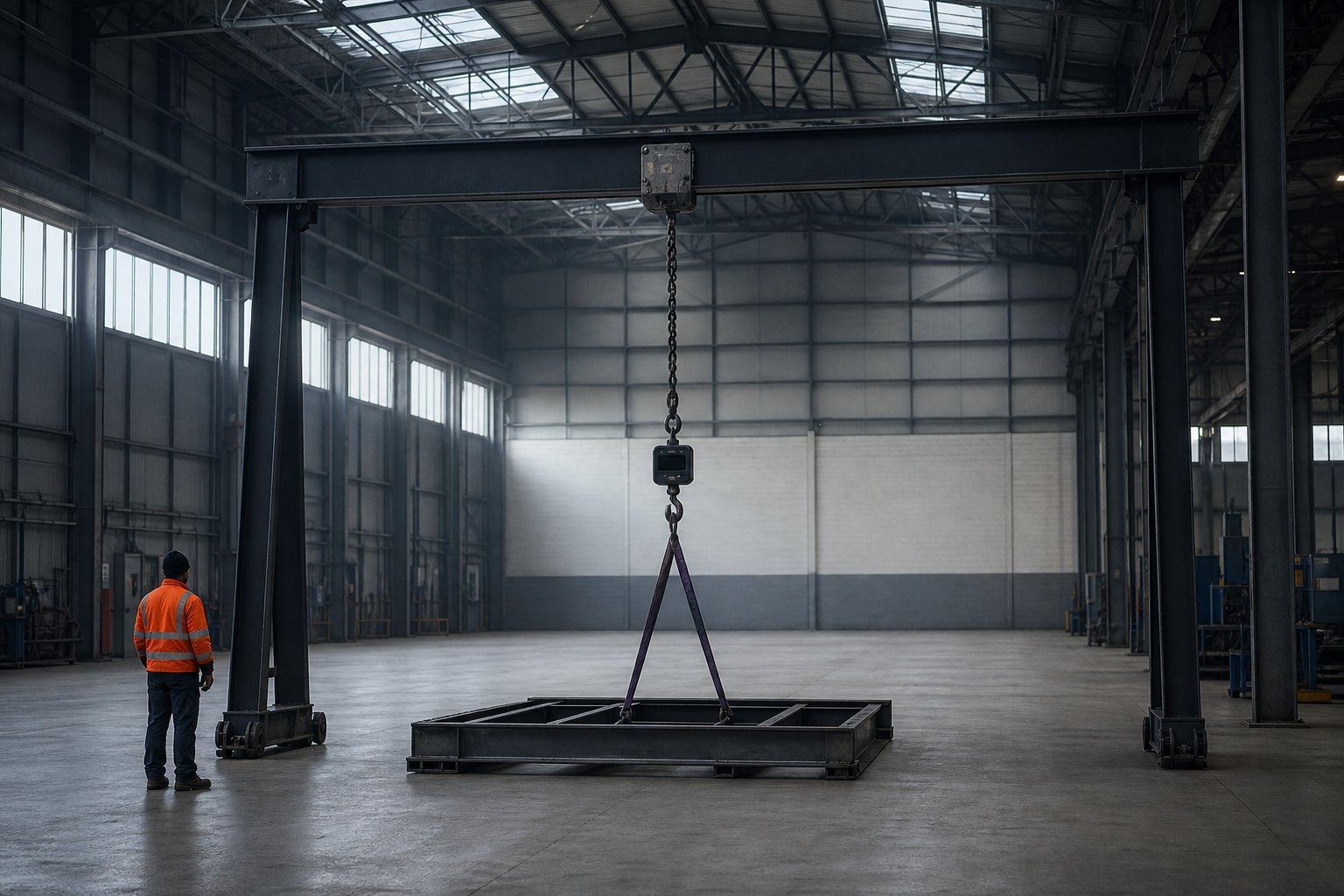
Crane scale hook opening size is suitable only when the intended, correctly rated connector passes through the usable throat without forcing the latch, seats in the hook bowl and can articulate in the planned line of pull. A nominal gap alone cannot prove compatibility: verify geometry, retention, ratings, headroom and both manufacturers’ instructions before lifting.
Opening, throat and latch clearance are different
“Opening size” can describe several measurements. Ask for a dimensioned drawing that identifies the reference points and whether the latch is included.
- Usable throat is the narrowest clear route through which the intended connector must pass during correct attachment. It is not the hook’s outside width.
- Latch-clear opening is the available passage while the latch is operated normally. A connector that needs the latch forced, bent or removed does not fit.
- Seat geometry is the shape and space at the hook bowl where the connector bears after attachment. Passing through the throat does not prove that it will seat correctly.
Compare these dimensions with the connector’s largest relevant cross-section, actual shape and entry path, not merely its nominal size. Check both the upper and lower connections.
The P6 opening still needs verification
The live P6 3-tonne crane scale page gives overall product dimensions, but those envelope measurements do not establish a verified usable throat, latch-clear opening or hook-seat profile. Do not infer any of them from a photograph, overall body width or overall height.
The published dimensions are a 2 cm hook opening on a 40 cm-tall, 4 kg unit; throat depth, latch-clear opening and seat profile are not itemised, so measure a production unit or obtain the manufacturer’s dimensioned drawing before committing to fittings.
Until then, obtain written dimensional confirmation for the production revision and have the complete proposed connection assessed.
Seating and latch operation matter after attachment
The connector must settle at the hook’s intended load seat, with bearing contact appropriate to both components. It must not balance on the tip, press against the side of the hook, wedge across the bowl or bear on the latch. The latch is a retention feature; it is not the load seat.
In a controlled, supported unloaded trial, check that the latch closes fully without help and remains free from connector pressure. Never hammer, lever, grind or otherwise modify either item.
HSE’s safe lifting by machine guidance says loads must be properly attached and unsuitable or makeshift equipment must not be used. If direct connection is incompatible, stop and obtain a manufacturer-approved, marked and correctly rated solution selected for the planned arrangement. Do not use improvised bolts, welded links, packing pieces or unverified adaptors.
Prevent side loading and preserve articulation
A hanging scale and its hooks should remain in the manufacturer-permitted load direction. A connector that pinches, cocks or bears on one cheek can introduce side loading instead of transmitting force through the intended axis.
There must be enough articulation for the assembled components to align naturally under the planned line of pull, without the connector fouling the scale housing or holding a hook out of line. This does not mean allowing uncontrolled rotation or using an improvised swivel. The competent planner must account for expected movement and select purpose-designed accessories where movement control is required.
If the scale tilts, a connector migrates towards the hook tip, the latch is contacted, or the assembly cannot align freely during a planned low trial, lower the load to its prepared support. Do not pull the scale straight by hand or continue lifting in the hope that it will settle. Review the geometry and method before reuse.
Include connectors in the headroom check
Hook fit can solve one problem while creating another. The scale, hoist hook or block, upper connector, lower connector, sling hardware and necessary articulation all consume vertical space. The proposed assembly must fit beneath the support while leaving the clearance and travel required by the lift plan.
Make a dimensioned stack-up from the actual connection points, not catalogue overall heights alone. Check the pick-up position, highest required load position, hoist travel, set-down route and any structure that could be struck. Our crane scale, hoist and gantry headroom guide explains this vertical-space assessment in more detail. Never shorten the rigging or omit an approved component simply to gain clearance.
A competent selection check
Under the HSE LOLER overview, lifting operations must be planned by a competent person, appropriately supervised and carried out safely. Compatibility should therefore be documented as part of the lift method, not decided by whether a convenient shackle happens to pass through.
Before approving the arrangement, the competent person should:
- identify every component and its current instructions, markings and examination status;
- confirm the permitted load direction and applicable safe working load or working load limit for each configuration;
- compare dimensioned throat, latch, seat and connector geometry at both ends of the scale;
- confirm correct seating, full latch closure and sufficient articulation in a supported trial assembly;
- include the scale and all accessories in total suspended mass and headroom calculations;
- define pre-use checks, exclusion controls, stop conditions and a safe lowering response; and
- authorise any low trial lift under the planned method, with nobody beneath the suspended load.
The lowest applicable rating governs the assembly. A larger-capacity scale does not increase the rating of a hoist, connector, sling or lifting point. Follow the linked crane scale safe-use guide for operational checks after compatibility has been established.
The P6 page states a 500 g display division, which is the displayed step and not verified accuracy. It is intended for check weighing, not legal-for-trade pricing or weight-based trade transactions. Neither the display nor the reading proves that the rigging connection is safe.
Frequently asked questions
Is the hook compatible if my shackle passes through?
Not necessarily. It must also seat as intended, permit full latch closure, articulate without fouling and carry load only in permitted directions. Ratings, instructions and examination status must also suit the lift.
Can hook clearance be estimated from a product photograph?
No. Perspective, scale and unseen latch or seat geometry make photographs unsuitable for dimensional approval. Obtain verified measurements or a controlled assessment of the actual components.
Who should choose the connector?
A person competent for the lifting operation should select it from manufacturer information, verified geometry, markings, condition and the planned load path. Familiarity with a connector is not evidence that it suits this hook.
Ready to try CraneScale?
Shop Now â £274.48