Understanding crane scale dimensions before ordering: overall size, hook opening and connection drawings
CraneScale’s P6 listing gives an overall height of 40 cm, body width of 16.3 cm, body depth of 3.5 cm, display panel width of 10 cm and hook opening of 2 cm. These are published product measurements, not confirmation that the scale will fit an existing hoist. CraneScale says compatibility depends on connection dimensions, clearances and the rated capacity of the complete lifting arrangement.
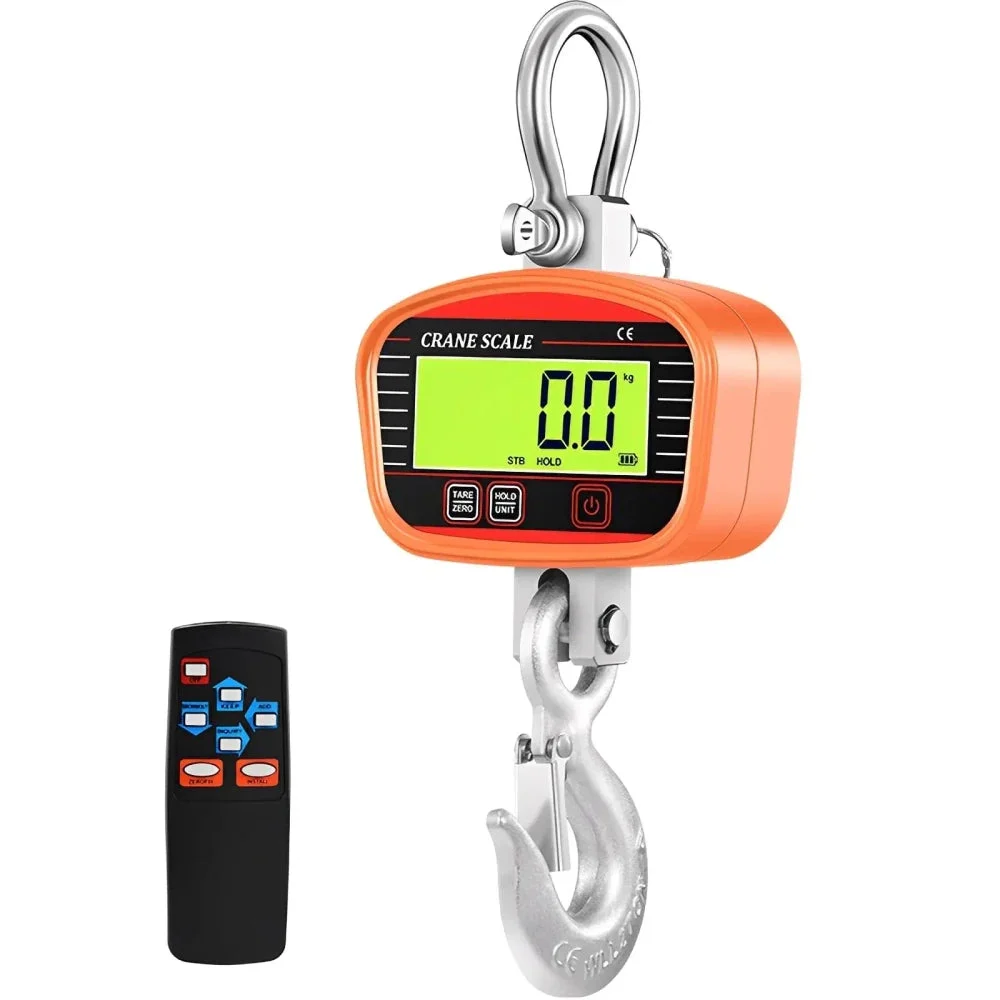
The useful question when reading crane scale dimensions is: what does each measurement actually describe? Keep the listing’s labels attached to its numbers so that an overall dimension does not become an assumed connection measurement.
CraneScale publishes the following dimensions for the P6:
| Published measurement | Stated size |
|---|---|
| Overall height | 40 cm |
| Body width | 16.3 cm |
| Body depth | 3.5 cm |
| Display panel width | 10 cm |
| Hook opening | 2 cm |
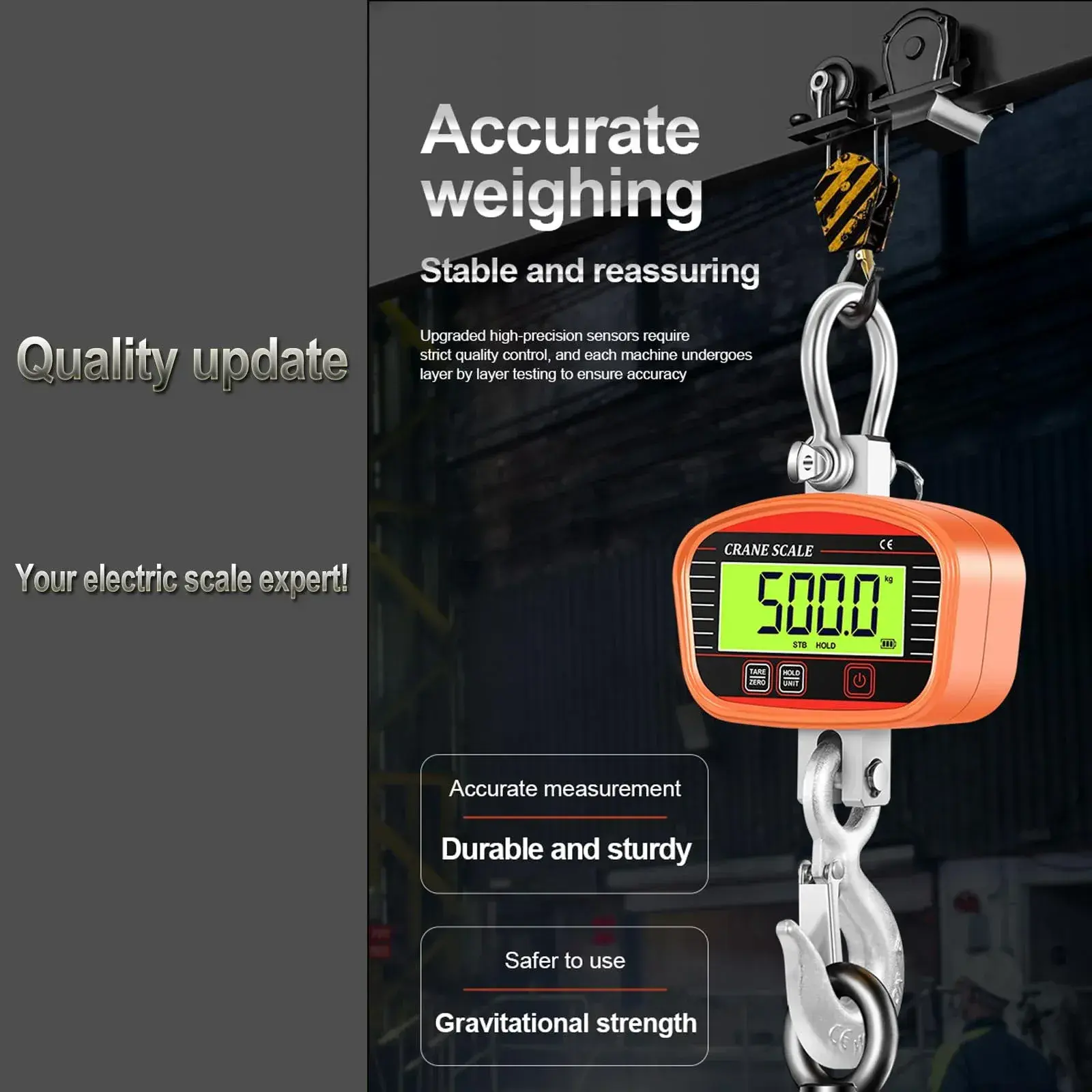
Read each value within that stated scope. Use “40 cm overall height” when describing the product; ask for a separately identified measurement if your question concerns the installed distance between load-bearing points. Likewise, retain “2 cm hook opening” rather than treating that number as a complete description of the connection.
This distinction gives you a useful purchasing boundary: the published dimensions answer questions about the listed product’s size. For a conclusion about your hoist, follow the listing’s broader compatibility criteria—connection dimensions, clearances and the rated capacity of the complete lifting arrangement. A matching overall height alone does not answer those other questions.
Separate overall size from connection hardware dimensions
A practical way to read a product specification is to separate three questions: what size is the instrument, what dimensions describe its connections, and what has been established about the intended lifting arrangement? Use the following as a proposed document-reading method, rather than an installation or approval procedure.
1. Record the measurement and its label together
For the P6, CraneScale lists 40 cm as the overall height and 2 cm as the hook opening. Keep those descriptions when making an enquiry. Ask for clarification before substituting either number for a different measurement, such as the installed distance between specified bearing points or the internal dimensions of an upper connection.
An enquiry could say: “The listing gives the P6’s overall height as 40 cm. Please identify the measurement endpoints and provide the connection dimensions relevant to my proposed arrangement.” This asks for the missing detail without assuming what the overall height includes.
2. Look for separately identified hardware information
Dillon’s ED Series documentation provides a useful example of how another manufacturer presents dimensional information: it includes an “Instrument & Hardware Dimensions” heading and a separate “EDxtreme Standard Upper Shackle” table with capacity and lettered dimension columns.
That example illustrates the distinction between an instrument description and a hardware-specific dimensional reference. It supplies information about Dillon’s products only; it does not supply P6 connection measurements. This article does not identify the geometric feature represented by each letter. Read the table alongside its corresponding drawing before interpreting those dimensions.
When requesting a drawing, ask for the exact model and supplied fittings to be identified, together with the endpoints of the dimensions you need. Treat a lettered table as something to read with its corresponding drawing, rather than a set of numbers to transfer between products.
3. Keep dimensional information separate from suitability
HSE states that LOLER requires equipment used for lifting to be fit for purpose and appropriate for the task. A product’s physical dimensions therefore address only part of the purchasing decision; an overall size match cannot establish task suitability.
For your notes, use three simple headings: published dimensions, details to request, and suitability still to assess. Put only explicitly identified measurements in the first group. Keep unanswered connection and installed-length questions in the second. Reserve a conclusion about the actual lifting arrangement for an assessment of that arrangement.
This approach lets you use the size information already available without turning an unanswered question into an assumed fit.
Before ordering, turn the remaining fit question into a specific enquiry
If your next decision depends on whether the P6 will connect to an existing hoist, ask for information about that particular arrangement before treating its published size as a fit confirmation. CraneScale’s compatibility answer identifies connection dimensions, clearances and the rated capacity of the complete lifting arrangement as relevant factors.
Use this suggested enquiry as a starting point:
I am considering the P6 for an existing hoist. Please provide a dimensioned reference for the exact product and supplied fittings, identifying the upper connection dimensions, the lower hook geometry and the endpoints used for the stated overall height. Please also clarify whether an installed bearing-point length is available for the proposed connection arrangement. I can provide the hoist model and details of the intended fittings. Which further details are needed to assess this arrangement?
Keep the reply with your purchasing notes. If it leaves a measurement undefined, record that question as unresolved rather than substituting an overall dimension or another manufacturer’s figure. The useful outcome is a clearer basis for the next decision, without assuming that a request for information amounts to approval.
References
- CraneScale P6 product listing — the source for the P6’s published dimensions and CraneScale’s compatibility wording.
- Dillon ED Series specifications PDF — an example of documentation that separately identifies instrument and hardware dimensions and an upper-shackle table. Use it for that distinction, not as a source of P6 measurements.
- HSE’s LOLER overview — guidance stating that equipment used for lifting must be fit for purpose and appropriate for the task.
Use the product listing to understand the measurements it names. If your purchasing decision also requires a conclusion about an installed connection or available headroom, make that a separate, explicit enquiry about your intended arrangement.
Ready to try CraneScale?
Shop Now — £274.48The product page shows £274.48 including VAT (£228.73 excluding VAT) on 17 November 2026. Check that page again before you order.