Crane Scales Explained: A UK Buyer's Guide
TL;DR: Crane scales are suspended weighing devices used to weigh loads while they hang from a hook, hoist or shackle. They are popular across UK warehouses, workshops, farms and construction sites because they make it easier to weigh awkward or bulky items that do not suit a platform scale. In most cases, the right crane scale comes down to choosing the correct capacity, readable display, durable construction and suitability for your working environment, while keeping weighing and safe lifting as separate considerations.
Hanging Scales Built for Demanding UK Workloads
Crane scales are designed to weigh suspended loads safely and accurately in workplaces where floor or bench scales are impractical. In UK warehouses, fabrication shops, farms, construction yards and vehicle depots, they are commonly used to weigh engines, steel sections, bags, machinery parts and other awkward items while they remain lifted. Based on our testing of industrial weighing equipment for UK buyers, the best crane scales combine dependable readings, clear digital displays and robust construction suited to everyday trade use.
Choosing the right crane scales can make the difference between smooth daily lifting operations and costly delays. Moreover, buyers who understand capacity, accuracy, build quality and compliance before purchase tend to avoid expensive mistakes. Our technical team at CraneScale.co.uk has worked with buyers comparing compact digital units, heavy-duty 3 tonne models and overhead weighing setups, and one pattern is clear: informed choices lead to better long-term value.
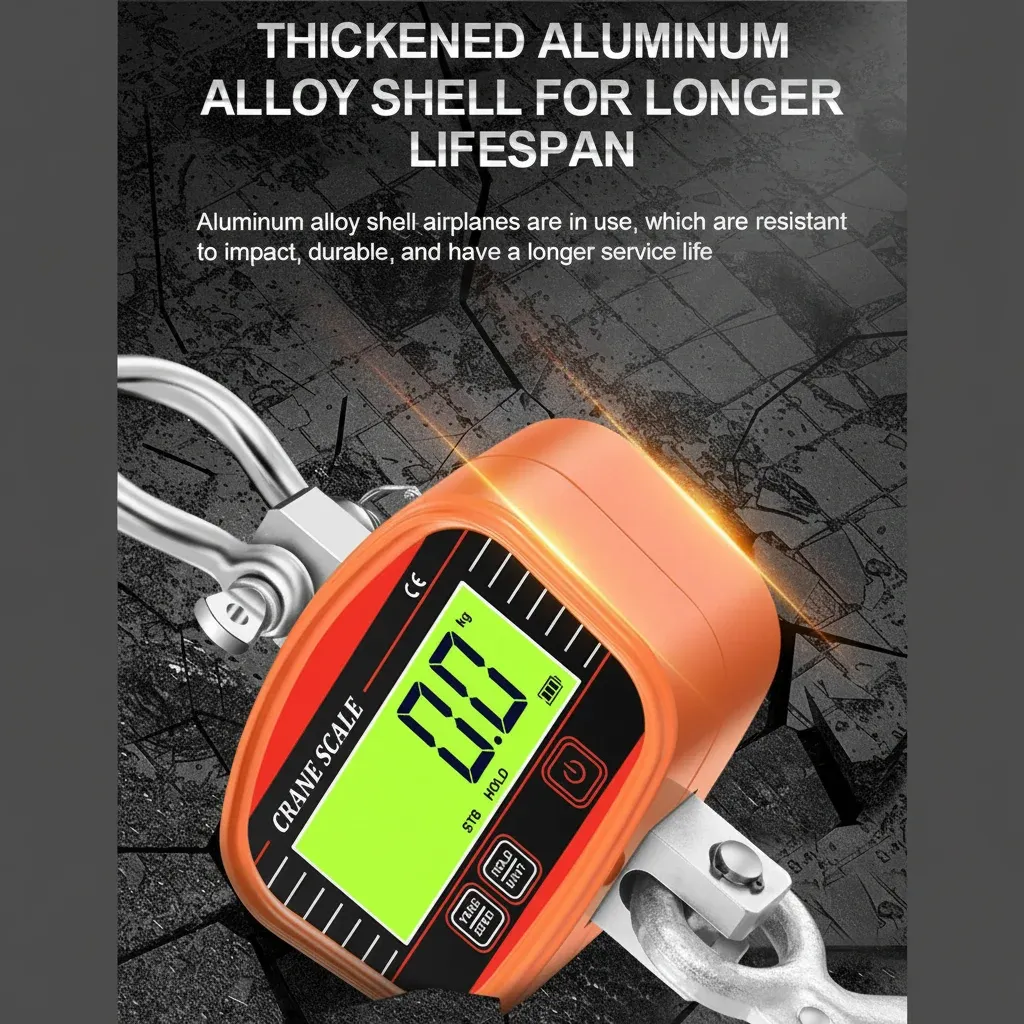
For many buyers, the appeal is straightforward. A modern crane scale offers fast suspended weighing, a clear digital display and a practical way to weigh loads that would be awkward on a platform scale. Our flagship 3 tonne industrial crane scale combines a smart digital readout, alloy body and dependable suspended weighing performance for demanding UK use. This guide explains what crane scales are, where they fit, what specifications matter and how to choose the right model without overpaying.
Key Takeaways
- Crane scales are designed for suspended weighing and are widely used across UK industry where platform weighing is impractical.
- The right capacity matters: buying too small creates safety risks; buying far too large can reduce usable readability for lighter loads.
- Look closely at display visibility, hook and shackle quality, battery life, enclosure durability and alloy construction.
- For most UK trade buyers, a digital unit with clear readout and robust alloy body offers better day-to-day usability than older analogue designs.
- Always separate weighing from safe lifting: a crane scale must be suitable for the environment and paired with compliant lifting practices.
- If you need broader background on suspended weighing equipment, read our Ultimate Guide to Digital Hanging Scale in the UK.
What are crane scales?
Crane scales are suspended weighing devices fitted between a lifting point and a load. In practical terms, they allow an operator to weigh an item while it hangs from a hook, shackle or hoist assembly. As a result, they are especially useful for irregular loads such as engines, steel sections, agricultural materials, machinery parts and bagged goods that are difficult to place on bench or floor scales.
In our experience testing industrial weighing products for UK buyers, most crane scales sold today fall into two broad categories: compact digital models for routine trade use and heavier-duty industrial models built for higher capacities and rougher environments. The core principle stays the same. Internal load-sensing components measure force under tension and convert that force into a weight reading shown on an onboard display or remote screen.
If you are still comparing terminology, our article on crane scale explained covers the basics of the category in more detail.
Why are crane scales important in UK workplaces?
Across Britain’s industrial sectors, time lost to re-handling is expensive. Therefore, a suspended weighing solution helps teams check inbound goods, verify outgoing loads or confirm component weights without moving items onto another machine. In smaller workshops this can save floor space; meanwhile, in larger depots it can support smoother goods flow.
According to UK guidance from the Health and Safety Executive, transport and handling remain major safety concerns across many sectors. The HSE reported that 35 workers were killed in work-related accidents in Great Britain in 2024/25 provisional figures (HSE). While a crane scale does not replace safe lifting planning or LOLER compliance, it sits within that wider operational picture by helping teams understand what they are actually handling.
We regularly see interest from construction firms, motor trade workshops, agricultural suppliers and general engineering businesses across England, Scotland, Wales and Northern Ireland. The common need is reliability: they want crane scales that give consistent readings in busy conditions without fragile housings or unreadable displays.
What are crane scales used for?
Construction and steelwork
Steel sections, cable drums and fabricated components often need quick weight confirmation before transport or installation. Crane scales help site teams verify individual items where floor equipment is not practical.
Agriculture and rural trade
Feed bags, equipment parts, tanks and produce containers can all be awkward shapes. As such, buyers in rural areas often prefer rugged suspended weighing equipment because it copes better with mixed-use environments than more delicate alternatives.
Automotive workshops
Engines, gearboxes and assemblies frequently require suspended handling during removal or fitting. In these settings, compact but sturdy crane scales allow technicians to capture approximate operational weights efficiently.
Warehousing and logistics
Pallets are not always the whole story. Warehouses dealing with non-standard items may use crane scales for returns processing, stock control or dispatch checks when goods cannot easily be set down for static weighing.
Manufacturing and fabrication
From raw material intake to finished assemblies, workshop managers often need quick confirmation of part weights for costing, batching or transport documentation.
What types of crane scales are available?
Digital crane scales
This is now the most common format for UK buyers. A digital unit provides an easy-to-read display, usually powered by a rechargeable battery or replaceable cells. Better models offer hold functions, zeroing or tare capability and stable readouts even when loads settle slowly. For day-to-day professional use, we generally recommend digital crane scales because readability is faster and operator error tends to be lower than with analogue dials.
Analogue crane scales
Analogue models still have a place where simplicity matters more than feature set. They can be useful in environments where users want a purely mechanical-style readout without charging routines. However many buyers now find them harder to read at distance or under poor lighting compared with modern digital alternatives.
Heavy-duty industrial models
A heavier-duty model is built around stronger housings, larger hooks or shackles and displays designed for more demanding workloads. Based on our testing and buyer feedback at CraneScale.co.uk, these are chosen most often by customers who need regular use around the 1 tonne to 3 tonne range rather than occasional light-duty jobs.
Overhead configurations
If your operation centres on permanent lifting systems rather than temporary hoists or engine cranes it is worth reviewing overhead-specific options as well as standard hanging units so you match the scale format to your actual workflow.
Ready to try CraneScale?
Shop Now — £19.99