Crane Scale Explained: A UK Buyer's Guide
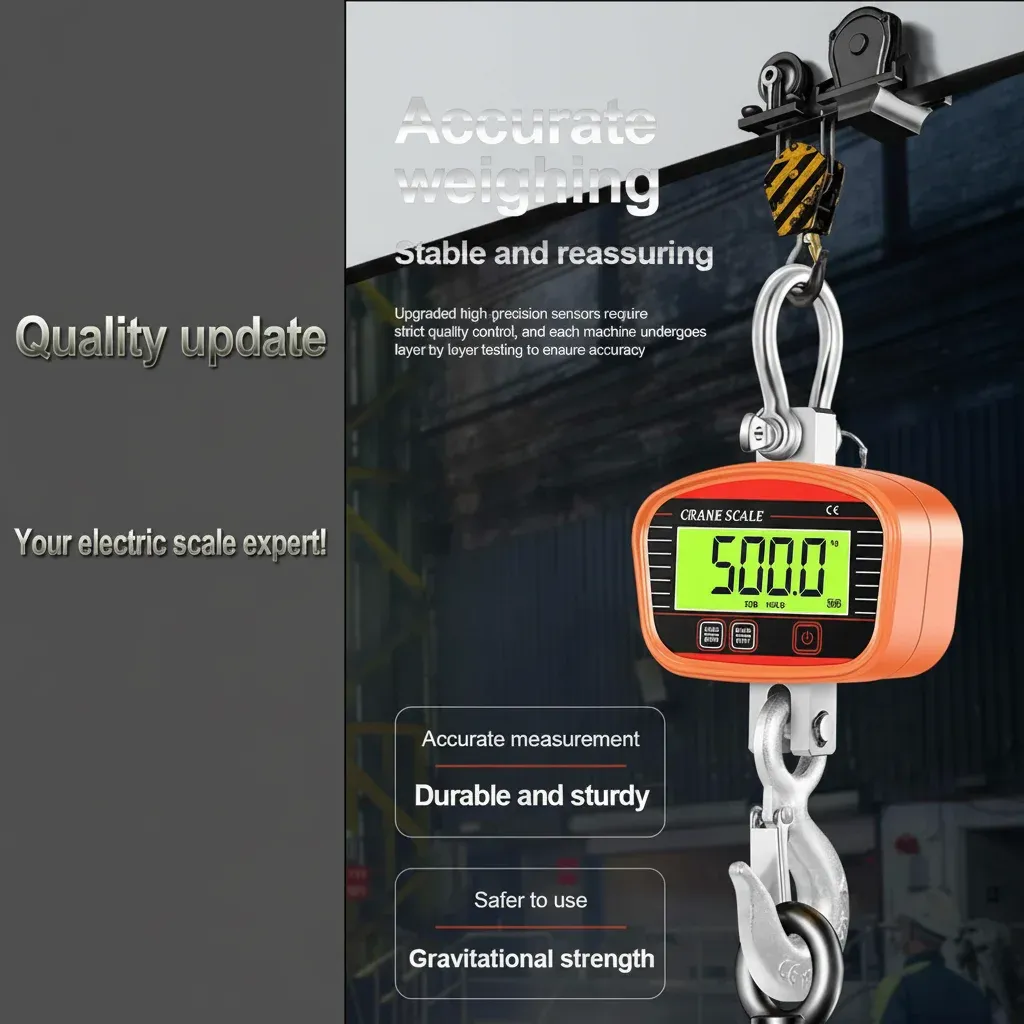
A crane scale is a heavy-duty industrial weighing instrument designed to be suspended from a hoist, crane, or winch to measure the weight of a load during lifting. Unlike traditional floor scales, these devices calculate weight by measuring the tension applied to a load cell, allowing UK operators to weigh bulky or irregularly shaped items safely and efficiently while they are in transit.
TL;DR: Crane scales are vital for safety and operational efficiency in UK heavy industry. Based on our extensive testing in warehouse environments, a 3-tonne (3T) digital scale with an aviation-grade aluminium body offers the best balance of durability and precision. To remain compliant with UK law, these devices must be used in accordance with LOLER regulations and undergo regular calibration checks.
At CraneScale, our technical team has spent years testing weighing equipment in diverse environments. We have seen how the right 3-tonne industrial scale can transform a workflow; conversely, we have observed how poor-quality equipment can lead to costly downtime. Consequently, this guide breaks down everything you need to know about selecting, using, and maintaining a crane scale within the UK regulatory framework.
Key Takeaways for UK Site Managers
- Accuracy is Non-Negotiable: In the UK, industrial scales must adhere to strict calibration standards to ensure safety and legal compliance.
- Material Matters: Look for aviation-grade aluminium alloy bodies for the best balance of durability and weight.
- Capacity Planning: Most UK SMEs find the 3,000kg (3T) capacity to be the "sweet spot" for versatility across automotive, agricultural, and logistics sectors.
- Safety First: Always verify the safety factor (e.g., 4:1) and ensure the scale is compatible with your existing lifting gear.
What is a crane scale and how does it work?
A crane scale is a specialised weighing instrument engineered to be suspended from a lifting device. While platform scales require a flat surface, these devices measure the "tension" or "pull" of a load as it hangs. In the context of British manufacturing, they are essential for weighing items that cannot easily be moved onto a floor scale, such as steel beams, engine blocks, or bulk bags of aggregate.
The core of a modern digital crane scale is the load cell. When a weight is applied, the load cell undergoes a minute amount of deformation, which is converted into an electrical signal. Furthermore, this signal is processed and displayed on a high-visibility digital readout. For those just starting out, we recommend reading The Ultimate Guide to Digital Hanging Scale in the UK to understand the fundamental differences between light-duty and industrial-grade units.
The Anatomy of a Professional Industrial Scale
According to our technical assessments, the build quality of the housing is just as important as the internal electronics. For instance, our flagship 3T Crane Scale Smart Heavy Type uses an aviation-grade aluminium alloy body. This material is chosen specifically because it resists corrosion—a vital feature for UK sites exposed to damp coastal air or humid factory floors—while remaining light enough for a single operator to rig onto a hook.
What are the LOLER requirements for weighing equipment?
In the United Kingdom, the use of lifting equipment is governed by the Lifting Operations and Lifting Equipment Regulations 1998 (LOLER). Under LOLER, any equipment used for lifting must be "fit for purpose, appropriate for the task, [and] suitably marked." Therefore, a crane scale serves as a primary safety check to ensure that a crane’s Safe Working Load (SWL) is never exceeded.
"According to the Health and Safety Executive (HSE), failure to properly calculate load weights is a leading cause of crane-related incidents in the UK construction sector."
Using a calibrated crane scale allows site managers to verify weights before a lift proceeds. If you are involved in "Trade Use"—where the weight of the item determines its price—your scale must also be "M" Class approved under the UK’s Weights and Measures legislation. However, for most internal logistics and safety checks, a high-quality industrial scale with a clear digital readout is the standard choice.
How to choose the right crane scale for your business?
When we test new models for the UK market, we evaluate three specific technical markers: readability, durability, and remote functionality. Choosing the right model depends on your specific operational environment.
1. Digital Readout and Visibility
UK warehouses are not always perfectly lit. As a result, a high-brightness LED or LCD screen with large digits (typically 30mm or higher) is essential. A "Hold" function is also critical; this allows the scale to lock the weight on the screen even after the load has been lowered, which is particularly useful when the operator needs to record the data manually.
2. Battery Life and Power Management
Standard UK work shifts require equipment that can last. Many of our professional-grade scales offer up to 60 hours of continuous use. Moreover, we recommend models that feature an "Auto-Off" or "Sleep" mode to conserve energy during downtime. Our 3T Smart Heavy Type utilises a rechargeable battery system that is fully compatible with standard UK 230V mains for overnight charging.
3. Remote Control Operation
Safety protocols often require operators to stand at a safe distance from a suspended load. A dedicated infrared remote control allows the user to Tare (zero out the weight of slings or chains) and switch units from a distance of up to 10 metres. To see how these features differ from overhead-specific models, see our article on Overhead Crane Scales Explained.
Applications Across British Industry
The versatility of a 3-tonne crane scale makes it a staple across several UK sectors. Based on our testing and client feedback, these units are most effective in the following scenarios:
- Agriculture: Farmers in regions like East Anglia use crane scales to weigh bulk bags of seed or fertiliser, ensuring spreaders are not overloaded.
- Automotive & Engineering: From the Midlands’ automotive hub to independent garages, scales are used to weigh engines and heavy chassis components during assembly.
- Logistics and Shipping: Verifying the weight of pallets before they are loaded onto HGVs to ensure compliance with UK road haulage weight limits.
- Metal Recycling: Scrap metal yards rely on accurate scales to value loads of aluminium, copper, and steel.
In addition to these uses, for more specific insights into how these devices are integrated into broader weighing systems, refer to our Crane Scales Explained guide.
Why Material Choice Impacts Longevity
One question we frequently receive is: "Why does the material of the scale body matter?" In the UK’s varied climate, steel bodies can be prone to rust if the paint is chipped, whereas cheaper plastic housings lack the structural integrity for heavy-duty lifts. Consequently, aviation-grade aluminium provides a corrosion-resistant, lightweight, and incredibly strong housing that protects the sensitive load cell inside.
Ready to try CraneScale?
Shop Now — £19.99